
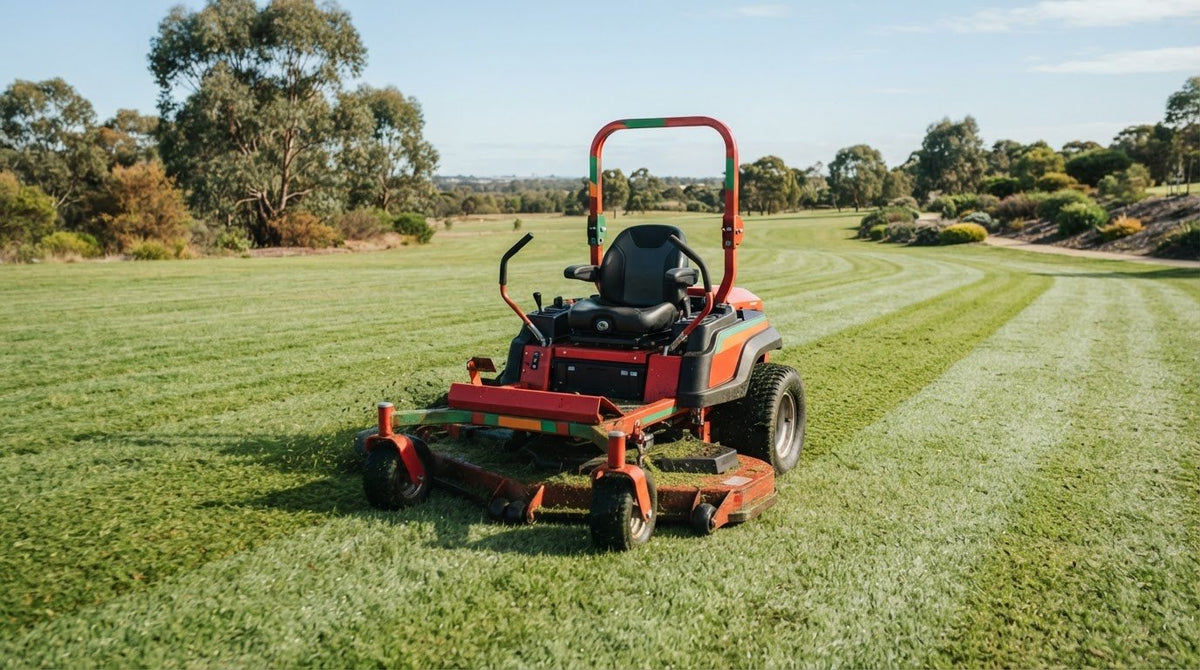
A wider deck and a longer advertised runtime don’t guarantee a mower will finish your site’s workload. To assess a commercial electric ride on mower, look at the complete work cycle: mowing, travel, charging and interruptions that affect the day’s schedule.
It’s reasonable to focus on how much ground a machine can cover and how long it can run. But real-world capacity also depends on grass growth, terrain, site layout and time available to recharge. A mower suited to open grounds may be a poor fit for tight spaces, slopes or a schedule with little room for delays.
This guide shows you how to compare machines against the work they need to complete. Assess deck size, terrain, charging arrangements and support in the context of your site. You’ll also see how to compare electric and petrol workflows, and where autonomous mowing could fit into a broader grounds plan. The aim is a practical choice that suits your crew and schedule.
Key Takeaways
- Judge a commercial electric ride on mower by the work it can complete across your schedule, not just its advertised runtime.
- Match cutting width and machine access to the site’s layout, terrain and required finish.
- Compare electric and petrol workflows by considering charging, refuelling, maintenance and noise in the context of your operation.
- Use a five-step selection process to define the workload, map the site, plan charging, compare specifications and review support.
- EMAM specialises in robotic and autonomous machinery and commercial outdoor power equipment to help inform your equipment decision.
What a commercial electric ride-on mower does, and where it fits
A commercial electric ride-on mower is an operator-driven turf machine powered by an electric battery system. The term describes its power source and how it is operated, not a particular brand, cutting capacity or level of performance. Those details vary by model and need to match the work.
A walk-behind mower is operated on foot and can suit smaller areas or close work around edges and obstacles. A ride-on lets the operator travel on the machine while mowing, which can suit larger, more open sections. An autonomous robotic mower follows a planned mowing setup without continuous steering by an operator. Each approach serves a different role in grounds maintenance.
Which commercial mowing jobs may suit a ride-on electric mower?
Open turf and repeatable routes can make ride-on mowing a practical option for contractors, schools, sports facilities and commercial properties. Familiar areas and routines can also help teams plan regular mowing. A site with broad grassed sections has different needs from one broken up by garden beds, paths, tight corners or frequent edging.
Ride-on mowing covers the main turf areas, but it won’t take care of every finishing task. Operators may still need separate equipment or extra time to trim around trees, posts, fences and edges. Assess the whole workload, including access, finishing requirements and a charging plan that fits the operating schedule.
How does a ride-on differ from an autonomous mower?
An operator steers a ride-on mower throughout the mowing task. An autonomous mower works from a planned route or operating setup, without continuous steering. These are different ways to organise grounds work, rather than direct substitutes for every site or task.
A team might use an operator-driven mower for scheduled work on open turf while autonomous equipment maintains suitable areas as part of a broader grounds plan. The right mix depends on site layout, mowing requirements and how the workday is organised. EMAM specialises in robotic and autonomous machinery as well as commercial outdoor power equipment. Explore EMAM’s commercial robotic mowing information to consider where autonomous mowing could fit alongside ride-on equipment.
Assess the full work cycle: mowing time, charging and daily output
Runtime is only one part of the day. The time available for mowing can shrink once you include travel between areas, setup, breaks and charging. Grass growth and site conditions also affect how quickly the job gets done. Treat a claimed maximum area as a guide, not a promise of daily output.
What determines real-world mowing capacity?
Long or fast-growing grass can take more work to cut than regularly maintained turf. Slopes, obstacles and narrow access can slow progress as operators manoeuvre around trees, garden beds, paths and other features. Even a site with plenty of open grass may include separate sections that add travel time.
Assess the actual workload: how often each area needs mowing, how much trimming the finish requires and whether the crew can follow an efficient route. Consider a commercial electric ride on mower against those conditions, rather than judging it by an area figure in isolation.
How should a commercial team plan charging?
Map the workday before comparing runtime claims. Note shift start and finish times, travel between work areas, planned breaks, charging opportunities and the next task. Identify where charging can take place and how the charger location affects machine movement. Charging time and requirements depend on the mower, so use its verified specifications when building the schedule.
Usable output depends on the whole operating schedule, not runtime alone.
Illustrative schedule: Imagine a crew working a daytime shift across two turf areas. They begin with the first area, allow time to move equipment to the second, then plan a charging window around a break if the mower’s charging requirements and site setup allow it. They resume with the remaining work. This example demonstrates a planning method, not a claim about how long a particular mower runs or charges.
Track completed work alongside mowing and charging time under normal operating conditions. This gives the team a more useful picture than runtime alone. For general background on electricity use, the U.S. Energy Information Administration explains Understanding electricity consumption. To discuss equipment selection for your commercial grounds workload, explore EMAM’s commercial outdoor power equipment.
Electric ride-on mower versus petrol: compare the job, not the label
Both electric and petrol ride-on mowers are operator-driven machines. The practical difference is how each is powered and what that means for your crew’s workday. This is a comparison of power sources, not manual and autonomous mowing. Assess each option against the site, work pattern and support needs.
| Consideration | Electric ride-on | Petrol ride-on |
|---|---|---|
| Power source | Uses a battery system. Check the model’s runtime and operating requirements. | Uses a petrol engine. Check its operating specifications and fuel requirements. |
| Between mowing tasks | Needs a suitable charging setup and time to recharge. | Needs access to fuel and time for refuelling. |
| Maintenance | Doesn’t have an engine, but still needs care for its cutting system, battery and other components as specified by the manufacturer. | Has engine-related servicing as well as care for its cutting system and other components. |
| Noise | Noise levels vary by model and operating conditions. Check the specifications for the machine and consider the surrounding site. | Engine and cutting noise vary by model and operating conditions. Consider nearby users and the site’s operating windows. |
These are general differences, not a substitute for comparing specific models. Runtime, charging needs, noise levels and maintenance schedules vary. Check current specifications and recommended servicing before estimating what a machine can handle.
When could an electric ride-on suit commercial work?
Battery operation may suit a predictable mowing pattern where charging can be planned around shifts and site access. A school, sports facility or commercial property with defined mowing windows may be able to fit charging into its routine. Noise-sensitive areas or operating periods can also make noise a useful comparison point, but an electric model isn’t automatically quiet enough for every setting. Assess the actual workload and site conditions.
When might petrol remain a practical option?
Petrol may suit operations without suitable charging access, or tightly scheduled work where a charging pause is difficult to accommodate. Fuel access and refuelling also need to fit the crew’s routine. Petrol machines have engine maintenance requirements, although the exact tasks vary by model. Compare the full process, including work periods, refuelling or charging, service needs and access. Neither power source is the automatic choice for every commercial site.
For a commercial electric ride on mower, weigh the battery workflow against the job rather than assuming that power source alone determines suitability. EMAM can help commercial operators consider ride-on equipment alongside their wider grounds-management requirements.
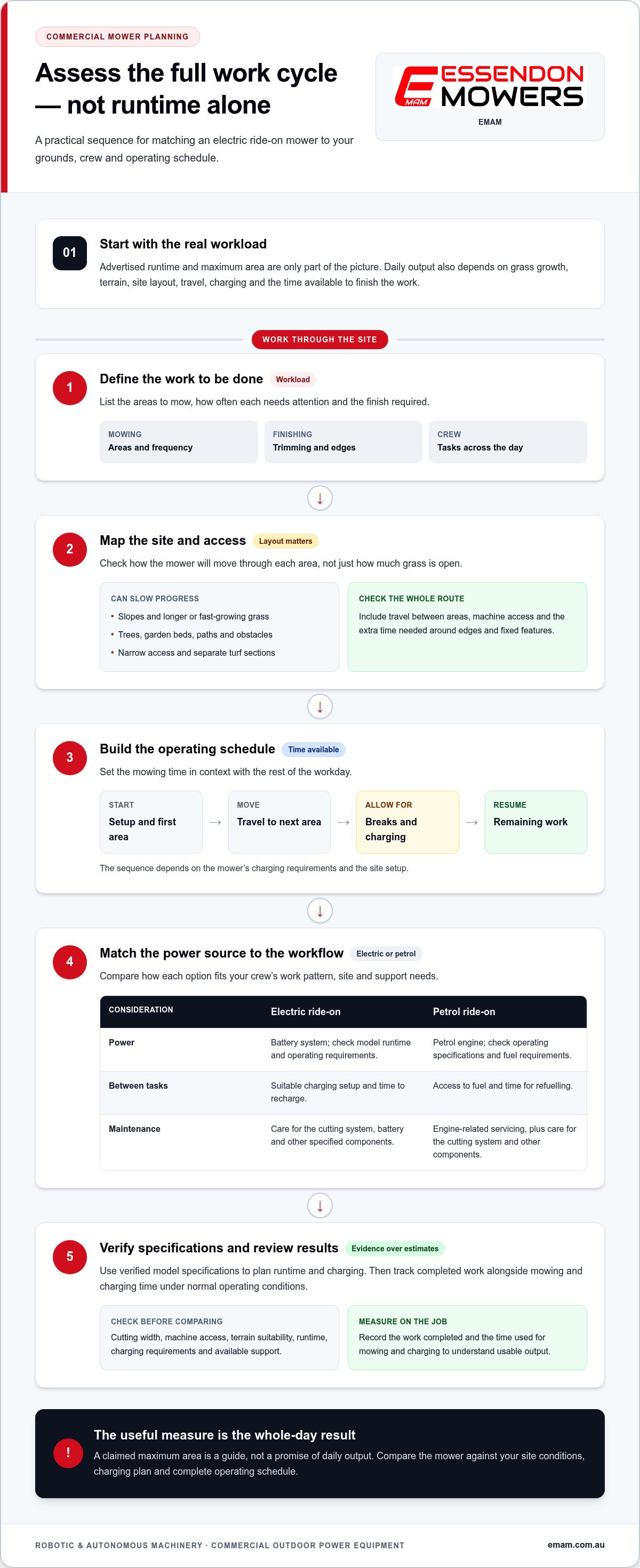
Choose the right commercial electric ride-on mower in five steps
Make the decision against a written job and site profile, not a single headline specification. A commercial electric ride on mower needs to fit the crew’s mowing pattern, site access, charging setup and ongoing support needs.
- Step 1: Define the workload. Record the areas to mow, how often they need attention, grass conditions and the finish required. Separate routine mowing from edging, trimming and other work that needs different equipment.
- Step 2: Map the site. Note slopes, obstacles, gates, narrow paths and travel between turf areas. Compare usable cutting width with access constraints. A wide deck may cover open ground efficiently, but it still needs to fit through access points.
- Step 3: Plan charging. Identify charging access and suitable charging windows. Include shift times, site access, travel and any equipment-sharing needs so the mower can be ready for its next task.
- Step 4: Compare specifications. Check current manufacturer information for battery, charging, cutting deck and operating details. Compare like with like, and record the conditions or assumptions behind any runtime or area claims.
- Step 5: Review support and management. Consider servicing, parts and equipment support, alongside operator procedures and how the machine will be managed within the wider fleet.
How do you assess the site and workload?
Walk or map the mowing areas, marking awkward sections as well as open turf. Record access points, surface changes, slopes, fixed obstacles and areas that need a more precise finish. Then map the work against a typical schedule: who operates the mower, when charging can happen and whether another crew or task needs the machine. This makes potential gaps and bottlenecks visible before you compare models.
Which specifications and support details should you compare?
Use verified, current specifications for each suitable machine. Check cutting width against both the area to cover and the narrowest access route, then compare battery and charging details with the planned workday. Review the manufacturer’s operating and maintenance guidance, and consider how parts, servicing and support fit your ownership plan. EMAM supplies ride-on mowers and commercial battery-powered outdoor power equipment. Discuss commercial mower selection with EMAM in light of your site and workload.
Plan your commercial mower decision with EMAM
A sound equipment decision comes down to how well the machine fits the site and completes the planned work cycle. Consider access, terrain, cutting requirements, charging arrangements and the support needed to keep the equipment in your operation. A commercial electric ride on mower should fit the way your team works, not just the figures on a product specification sheet.
What information should you prepare before discussing equipment?
A clear picture of the job makes equipment discussions more useful. Gather the key details about your site and operating routine:
- Areas to mow, mowing frequency and typical grass conditions.
- Slopes, obstacles, access routes and tight sections that may affect machine choice.
- Planned operating hours, charging access and whether equipment is shared across crews or sites.
- The finish required, including any edging or trimming that needs separate equipment.
- Your priorities, such as reducing manual effort, fitting work into set operating windows or planning maintenance.
These details help distinguish a machine that suits the whole workload from one that only appears suitable on paper. They also give the discussion a practical starting point, especially when several operators, areas or tasks need to be coordinated.
How can EMAM help with a considered equipment decision?
EMAM specialises in robotic and autonomous machinery, alongside commercial outdoor power equipment, including ride-on mowers. Discussing your application can help narrow the equipment categories to consider, whether the work calls for an operator-driven ride-on mower, battery-powered commercial equipment or autonomous mowing as part of a broader grounds plan. Match product specifications and charging requirements to the machine and site.
Bring your site notes and priorities to the conversation. EMAM provides equipment sales and support for commercial grounds work, with a focus on practical fit rather than assumptions about runtime or capacity.
Discuss your commercial mowing requirements with EMAM.
Make your next mower decision work on site
Choose a commercial electric ride on mower for the work it can complete across your operating schedule, not its headline runtime alone. Site access, terrain, grass conditions, charging arrangements and the finish you need all affect whether it fits. Compare those requirements with current machine specifications, then weigh electric and petrol options against your crew’s actual workflow.
EMAM supplies ride-on mowers and commercial battery-powered outdoor power equipment, with specialist knowledge of robotic and autonomous machinery. That broader view can help you consider the right equipment approach for your grounds, including where operator-driven and autonomous machines may each play a role.
Discuss your commercial mowing requirements with EMAM and bring a clear picture of your site, schedule and priorities. A well-matched machine is easier to plan into the workday.
Frequently Asked Questions
Is a commercial electric ride-on mower suitable for a full workday?
It can be, if its working time, charging requirements and workload fit the team’s schedule. A full shift may include travel, setup, breaks and other tasks, not just mowing. Map the workday and compare it with the mower’s current specifications. Grass conditions, terrain and site layout also affect how much work gets done. Plan charging and possible interruptions before relying on one machine for a full day.
How much area can a commercial electric ride-on mower cut on one charge?
There isn’t one reliable area figure for every site or machine. A commercial electric ride on mower’s usable coverage depends on its verified specifications, grass growth, terrain, obstacles and time spent travelling between areas. A manufacturer’s maximum area claim isn’t a guaranteed result for your property. Compare claimed capacity with your actual mowing conditions and schedule, then allow for charging and finishing work.
Can a commercial electric ride-on mower handle slopes?
Some machines may suit sloping ground, but capability depends on the specific model and site conditions. Check the manufacturer’s guidance for slope limits and operating conditions, then consider the slope’s length, surface, grass and any uneven or slippery sections. Don’t assume a mower suited to flat, open turf will perform the same way on a steep or irregular area. Include safe access and operator procedures in your assessment.
How long does it take to charge an electric ride-on mower?
Charging time varies by mower, battery system, charger and charging conditions, so use the current manufacturer specifications rather than a general estimate. Include charging in the operating plan alongside shift hours, breaks, site access and the next mowing task. Consider where the charger will be located and whether the machine can reach it easily. A suitable charging plan helps reduce avoidable interruptions to the work schedule.
Are commercial electric ride-on mowers better than petrol mowers?
Neither power source is automatically better for every operation. Electric models need a suitable charging plan, while petrol models need fuel access and engine maintenance. Noise levels and operating requirements also differ by machine. Compare both options against your site, schedule, access to charging or fuel, and maintenance arrangements. The useful question is which mower supports the complete work process for your crew, not which category wins in general.
What should I check before buying a commercial electric ride-on mower?
Start with the work: mowing frequency, grass conditions, terrain, access routes and required finish. Then compare current specifications for battery, charging, cutting deck and operating requirements. Check that the mower can access all work areas and that charging fits the schedule. Include operator procedures, servicing, parts and ongoing support in your decision. Record your assumptions so you can compare suitable machines on the same basis.
Can a ride-on mower replace an autonomous mower?
Not in every situation. A ride-on mower is steered by an operator, while an autonomous mower operates without continuous steering. Each can suit different tasks and site conditions. A ride-on may be used for scheduled mowing, while autonomous equipment may maintain suitable areas as part of a broader grounds plan. EMAM specialises in robotic and autonomous machinery as well as commercial outdoor power equipment, helping customers consider how equipment types fit their work.